What follows is the third text in a row derived from the consultation, Bibliquip 4, that I helped organize for our Bible school staff in Europe in May of 2026 (see Mapping and Doctrinal Squares). All three look for ways to handle controversial topics. This time, the approach is to look at an issue from every angle and weigh all the relevant evidence.
You can also watch this content as a VIDEO PODCAST
In addition, this is an experiment in AI. I had a video recording of my lecture, which I had turned into a transcript. The quality was poor; it contained a lot of gibberish. I asked ChatGPT to turn the transcript into a full draft. I then edited this draft to make sure I agree with what came out 😊. Here it is.
Introduction
Few passages in the New Testament have generated more discussion than Paul’s statement in Romans 11:26: “And in this way all Israel will be saved”. Does “all Israel” refer to the church, composed of Jews and Gentiles together? Does it refer to the Jewish people as an ethnic community? If the latter, does Paul expect a future mass conversion of Israel? Or is he simply describing the salvation of the believing remnant of Israel?
These questions cannot be answered by looking at Romans 11:26 in isolation. Paul’s statement is the climax of a much larger argument that begins in Romans 9 and continues through chapters 10 and 11. Only by following that argument carefully can we hope to understand what Paul means.
This essay therefore takes a close look at Paul’s reasoning throughout Romans 9-11, paying particular attention to the meaning of Israel in each stage of the discussion. Rather than approaching the text from the perspective of later theological systems – whether replacement theology, Christian Zionism, or one of the intermediate positions – we will ask a simpler question: How does Paul himself use the term Israel as his argument unfolds?
Romans: The Gospel for Jew and Gentile
Romans is often read primarily as Paul’s systematic presentation of the gospel, which it is. Yet at the same time, Paul writes with a particular pastoral concern in mind: the relationship between Jewish and Gentile believers within the churches in Rome.
Throughout the letter, Paul repeatedly returns to this theme. His famous summary of the gospel already contains it: the gospel is “the power of God for salvation to everyone who believes, to the Jew first and also to the Greek” (Rom. 1:16). This dual emphasis is not incidental. It prepares the reader for one of the central questions running through the entire letter: how do Jews and Gentiles now relate to one another?
Only in chapters 14 and 15 does Paul address the practical tensions between Jewish and Gentile believers in Rome directly. Long before reaching those chapters, however, he has already been laying the theological foundations for his pastoral appeal. Sometimes his argument emphasizes God’s continuing faithfulness to Israel. At other points he stresses the full inclusion of the Gentiles. He manages to carefully hold these two truths together.
Romans 9-11 forms the theological centre of this thread. Here Paul addresses the question that naturally arises from his presentation of the gospel:
If Israel was God’s chosen people, how is it that so many Jews have failed to recognise Jesus as the Messiah?
This is not merely a historical puzzle. It raises fundamental questions about God’s faithfulness, the identity of his people, and the future of Israel itself.
Romans 9: Not All Israel Is Israel
Paul’s first answer is surprising. He insists that Israel’s present situation has not taken God by surprise. In fact, it belongs within God’s sovereign purposes.
The chapter opens with Paul’s profound grief for his own people. He lists Israel’s extraordinary privileges: the adoption, the covenants, the giving of the law, the worship, the promises, the patriarchs, and ultimately the Messiah himself, who according to the flesh came from Israel.
Yet despite these privileges, many Israelites have rejected Christ. Has God’s word therefore failed? Paul’s answer is a decisive no: “Not all who are descended from Israel belong to Israel” (Rom. 9:6).
This statement has often been taken as though Paul simply redefines Israel to mean the church. The text, however, is more subtle than that.
Paul certainly distinguishes between ethnic descent and participation in the promises. Mere physical descent from Abraham has never guaranteed participation in God’s saving purposes. Throughout Israel’s own history, God distinguished between Isaac and Ishmael, Jacob and Esau, and repeatedly between the faithful and the unfaithful within Israel itself.
What Paul explicitly says, therefore, is that not every ethnic Israelite belongs to the Israel that inherits God’s promises.
Notice, however, what he does not say. He does not, at least not at this point, conclude that Gentile believers therefore become Israel. This interpretation is often assumed, but Paul himself does not draw that conclusion here.
Later in the chapter he speaks of those whom God has called, “not from the Jews only but also from the Gentiles” (Rom. 9:24). Gentiles are now unquestionably included among God’s people. They who once were “not my people” have become “my people” (Rom. 9:25).
But this introduces an important distinction. Paul speaks of the people of God. He does not explicitly say that Gentiles thereby become Israel.
That distinction is easy to overlook, yet it proves crucial throughout Romans 9-11. We are dealing with three closely related concepts, not just two:
- Israel
- The people of God
- The church
These concepts overlap, but Paul never simply treats them as identical. One of the main challenges of interpreting Romans 9-11 lies precisely in determining how these terms relate to one another.
Romans 9 therefore narrows the definition of Israel in one respect: not every ethnic Israelite inherits the promises merely by physical descent. But it stops short of expanding the term Israel to include believing Gentiles.
That question remains open as Paul’s argument continues.
Romans 10 and 11: Has God Rejected His People?
Romans 10 continues Paul’s explanation of Israel’s present unbelief. Although Israel has pursued righteousness with great zeal, it has failed to attain it because it has not sought it through faith in Christ. This chapter largely explains how Israel arrived at its present situation.
Chapter 11, however, asks a different question: Has God rejected his people? Paul’s answer is immediate and emphatic: “By no means!” (Rom. 11:1)
At first sight, the answer seems straightforward. Israel, it appears, is still God’s people – but in what sense? What does this mean after everything Paul has said in Romans 9 and 10?
As Paul points out, there remains a faithful remnant chosen by grace. But is the remnant all that Paul has in mind? Should we read Paul’s statement as though it means: “God has not rejected the believing remnant”?
While this is certainly true, it does not seem to be Paul’s point; it is too glaringly obvious to warrant such an emphatic affirmation.
Throughout chapter 11 Paul continues to speak about Israel as a recognizable historical and ethnic community that extends beyond the believing remnant. This becomes particularly clear when Paul appeals to the story of Elijah. In Elijah’s day, Israel appeared almost completely apostate. Nevertheless, God had preserved seven thousand who had not bowed the knee to Baal.
The existence of a remnant did not mean that the rest of Israel had ceased to be Israel. Nor did God abandon the nation altogether. The remnant demonstrated that God’s covenant purposes for Israel remained alive even during a period of widespread unbelief. The same pattern appears to continue in Paul’s own day.
There is indeed a believing remnant. Yet alongside that remnant there remains the larger Jewish people. What, then, is God’s relationship to this larger community?
Paul does not adopt either of two opposite conclusions.
On the one hand, unbelieving Israel cannot simply be regarded as already enjoying the blessings of salvation. Faith in Christ remains indispensable.
On the other hand, neither does Paul conclude that Israel as a people has been permanently cast away.
His entire discussion points toward a more complex intermediate position. Israel has stumbled yet has not fallen beyond recovery. Paul describes Israel’s condition with expressions that suggest neither complete inclusion nor complete exclusion.
So, is Israel God’s people? Yes, but… [not in the fullest sense; not in every way; not with full benefits].
Stumbling Is Not the End of the Story
Paul next asks another crucial question: “Did they stumble so as to fall beyond recovery?” (Rom. 11:11, NIV). Again his answer is decisive: “By no means!”
The language Paul uses throughout this section deserves careful attention:
- Israel has stumbled.
- Israel committed a trespass.
- Israel experienced failure.
- In Romans 11:15, Paul even speaks of their rejection.
At first sight these expressions sound entirely negative. Yet remarkably, Paul does not present them as the end of Israel’s story. Instead, they mark the beginning of a new phase in salvation history:
- Israel’s trespass has brought riches to the Gentiles.
- Israel’s failure has opened the door for the gospel to spread throughout the nations.
This does not mean that Israel’s unbelief was somehow good in itself. Rather, Paul marvels at God’s ability to bring blessing out of Israel’s failure.
But failure is not the final stage. Paul repeatedly points beyond Israel’s present condition toward something still to come:
- He speaks not only of Israel’s trespass but also of their fullness.
- Not only of their rejection but also of their acceptance.
These expressions suggest that Paul expects Israel’s present condition to give way to something richer and more complete. Exactly what he expects has long been debated.
One phrase in particular has drawn attention: “What will their acceptance mean but life from the dead?” (Rom. 11:15). Some understand this as a reference to an eschatological event immediately preceding Christ’s return. That interpretation seems unlikely. Why then, why these Jews? Does Jewish ethnicity, apart from faith suddenly qualify for salvation after all?
Additionally, throughout the chapter Paul consistently describes a historical process rather than a sudden apocalyptic intervention:
- Israel’s stumbling leads to Gentile salvation.
- Gentile salvation, in turn, is intended to provoke Israel to jealousy.
- That jealousy may then lead many Jews to faith in Christ.
The movement is gradual and reciprocal. Paul is not simply waiting for a dramatic miracle at the end of history. He actively participates in this process through his own ministry. He even explains why he devotes himself so passionately to preaching among the Gentiles: “…in order somehow to make my fellow Jews jealous, and thus save some of them” (Rom. 11:14).
This statement is significant. Paul evidently believes that the conversion of Gentiles is itself part of God’s strategy for bringing Israel back. The church, therefore, is not merely the beneficiary of Israel’s stumbling. It also becomes God’s instrument for Israel’s eventual restoration.
Sadly, the church in history has often failed precisely at this point. Instead of provoking Israel to holy jealousy, Christians have too often been hostile or contemptuous. Paul’s vision, in contrast, was one in which believing Gentiles would display such evident experience of God’s mercy that many Jews would be drawn to reconsider the claims of their Messiah.
That expectation prepares the way for Paul’s discussion of the olive tree and, ultimately, for his statement that “all Israel will be saved.”

The Olive Tree: One People of God
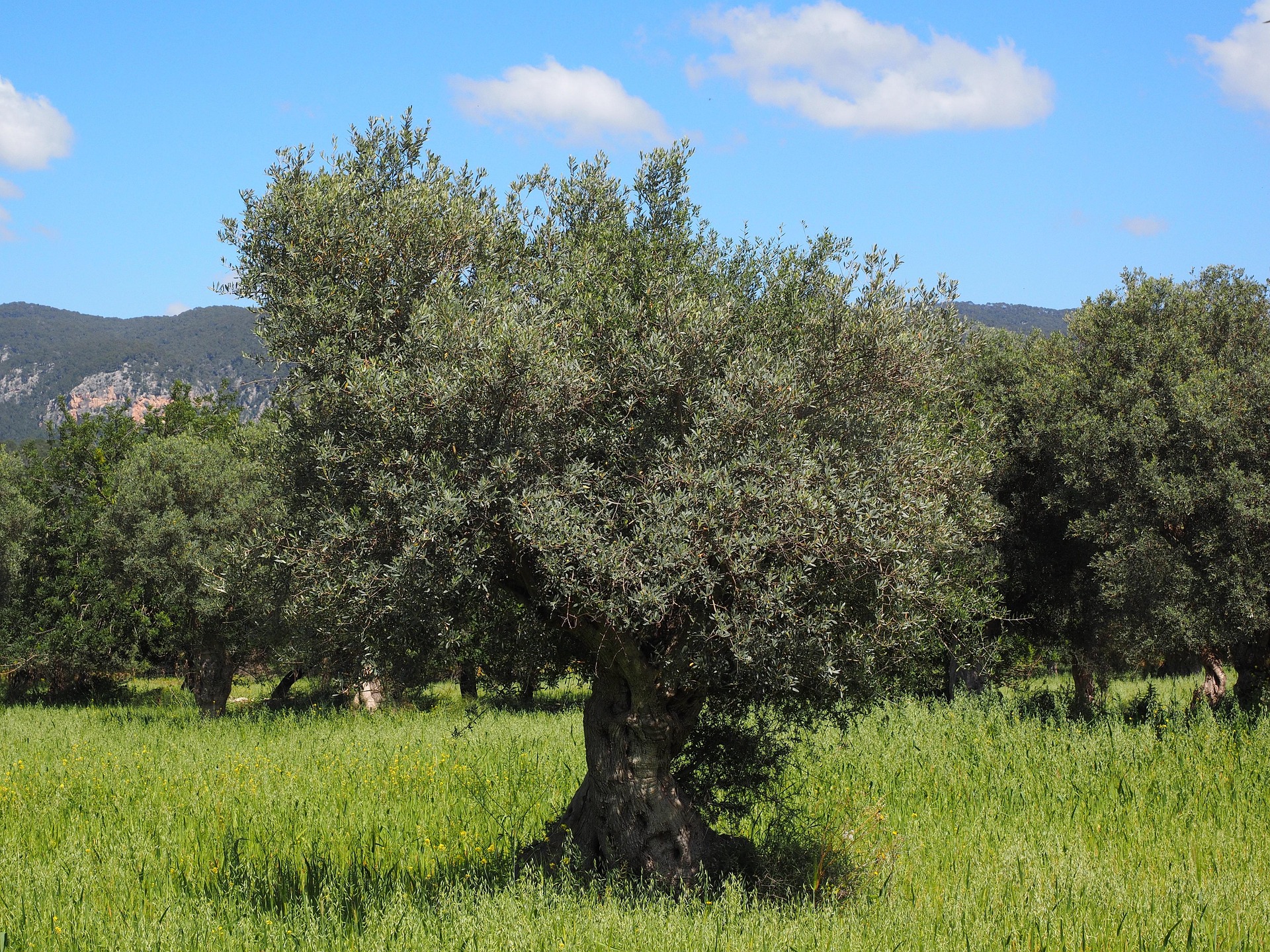
In Romans 11:17-24, Paul presents one of the most memorable images in Romans: the olive tree. This metaphor has played a central role in discussions about Israel and the church, yet surprisingly, Paul leaves the tree undefined. As a result, interpreters often ask the image to answer questions that Paul himself never addresses.
The basic point of the metaphor is clear enough. Some of the natural branches have been broken off because of unbelief. Wild olive branches – that is, believing Gentiles – have been grafted in. The purpose is to warn Gentile believers against arrogance.
At the same time, it shows that the natural branches are not beyond hope. If they do not persist in unbelief, God is able to graft them in again.
Yet, as noted, one important question remains unanswered: What exactly does the olive tree represent?
Many readers simply assume that the tree is Israel. Some think the patriarchs. Others understand it to be the people of God throughout salvation history. Still others, going one small step further, argue that it represents the “church” of Old and New Testament believers – and therefore now simply the church.
Paul never explicitly tells us.
The option that the tree represents the people of God has much to commend it. The tree is rooted in the patriarchs, particularly Abraham. His faith precedes the existence of Israel as a nation, so he was not an Israelite in the ethnic sense. Gentile believers are unquestionably included in this tree. The metaphor therefore seems broader than ethnic Israel alone.
If that is correct, the olive tree represents the covenant people of God throughout history. Believing Gentiles are truly incorporated into this people. They do not become second-class members. Nor do they merely stand alongside Israel. They participate fully in the rich root that nourishes the tree.
Yet it is important to notice what Paul does not say. Although Gentiles are grafted into the olive tree and become part of the people of God, Paul does not explicitly say that they thereby become Israel.
This observation may appear minor, but it becomes highly significant for the interpretation of Romans 11:26.
Throughout chapters 9-11 as well as elsewhere, Paul appears to distinguish between participation in God’s people and belonging to Israel as an ethnic community. The two realities overlap, but they are not simply identical.
The Natural Branches Remain Israel
The metaphor also sheds light on another important point. When some of the natural branches are broken off, they do not thereby cease to be Israel (see Rom. 11:25). They have certainly lost participation in the nourishing life of the tree. But they do not lose their ethnic identity. Indeed, the very possibility of their being grafted in again depends upon their continuing identity.
The larger community of Israel continues to exist as a recognisable people. This observation becomes particularly important when we reach Paul’s repeated references to Israel later in the chapter.

“The Fullness of the Gentiles”
Another important expression appears immediately before the contested statement that “all Israel will be saved.” Paul speaks of a “partial hardening” that has come upon Israel “until the fullness of the Gentiles has come in.”
Again Paul introduces a term that he does not define. What is “the fullness of the Gentiles”? Does it mean every Gentile? Does it refer to a predetermined number? Or does it simply indicate the great multitude of Gentiles whom God intends to bring into his kingdom? Paul does not answer these questions.
What is striking, however, is the parallel language he uses. Earlier in the chapter he has already spoken of Israel’s fullness (Rom. 11:12). Now he speaks of the fullness of the Gentiles.
The parallel must be deliberate. Whatever precisely Paul means by “fullness”, he applies the same concept to both groups.
This observation cautions against reading “all Israel” as though it necessarily means every individual Jew without exception. Paul’s own language suggests something more corporate than numerical. Perhaps we may paraphrase: “Israel as a whole”.
Just as “the fullness of the Gentiles” does not require the salvation of every Gentile, so “all Israel” need not include every individual Israelite. Instead, Paul appears to envisage a substantial inclusion of both groups within God’s saving purpose.
The symmetry is striking.
Israel’s stumbling brings salvation to the Gentiles. The salvation of the Gentiles, in turn, becomes the means by which Israel is drawn back. As he will state outright in Romans 11:30-32, Paul envisions a single redemptive story in which Jews and Gentiles equally become recipients of divine mercy.
We are now ready for the climactic statement of verse 26, where all the threads of Paul’s argument come together.
“And in This Way All Israel Will Be Saved”
Few words in Paul’s letters have generated more debate than these:
A partial hardening has come upon Israel until the fullness of the Gentiles has come in. And in this way all Israel will be saved. (Rom. 11:25-26)
Who is “all Israel”? Broadly speaking, two main interpretations have dominated the discussion.
The first understands “all Israel” to mean the church, consisting of believing Jews and Gentiles together. According to this view, Paul uses “Israel” here in a redefined or expanded sense. The true Israel is the people of God in Christ, regardless of ethnic origin.
The second understands “all Israel” to refer to the Jewish people. Paul therefore expresses the expectation that Israel, as a people, still has a future within God’s saving purposes.
Both views seek to do justice to Paul’s argument. The question is which one best fits the flow of Romans 9-11.
Paul’s Usage of Israel
Again and again, the word Israel in Romans 9-11 refers naturally to the Jewish people as an ethnic community.
That raises an obvious question. Why should the expression “all Israel” in verse 26 suddenly have a different meaning?
Of course, such a shift would not be impossible. In such a reading, the word all would be the cue. In combination with the preceding olive tree image, it would be taken to indicate a greater or expanded Israel of Jewish and Gentile believers. I used to read it this way myself.
However, the context of Romans 9-11 points in the opposite direction. Paul’s concern has consistently been the fate of the Jewish people:
- How has Israel responded to the Messiah?
- Has God rejected Israel?
- Has Israel stumbled beyond recovery?
- What future remains for Israel?
The subject does not change. Paul’s concern throughout remains the same historical people with whom the discussion began. It seems unlikely the first ‘readers’, on hearing this letter read out loud to them, presumably by Phoebe (Rom. 16:1f), would have caught on if “Israel” here suddenly had a different referent, distinct from all other uses of the term in Romans.
More likely, the same Israel whose unbelief Paul has been discussing throughout chapters 9-11 is now the Israel that “will be saved”.
This does not mean that every individual Jew will automatically be saved irrespective of their personal response to Christ. Earlier we observed that Paul speaks of the fullness of the Gentiles and the fullness of Israel in closely parallel language. The latter expression points to Israel corporately.
Individual Israelites may still reject the gospel, just as individual Gentiles may reject it. Yet Paul nevertheless anticipates a future in which Israel, as a people, participates far more fully in God’s salvation than has been the case thus far.
“They Are Enemies”
Romans 11:28 confirms that throughout, Paul continues to think of ethnic Israel: “As regards the gospel, they are enemies for your sake. But as regards election, they are beloved for the sake of their forefathers.”
Who is “they”? Obviously, Jews. But since Paul does not indicate a change of referent (“they” is not defined in verse 28), it is most likely the same as in Romans 11:26f: the ones whose sins are taken away, Jacob, and therefore, “all Israel”.
“In This Way”
Back to verse 26. We should not overlook the opening words of the verse. Paul does not say: “And then…”, but: „And in this way…”
In what way? He does not announce a future event disconnected from everything that precedes it. Instead, he points back to the process he has described earlier in the chapter (Rom. 11:11-15):
- Israel’s stumbling leads to salvation for the Gentiles.
- The salvation of the Gentiles provokes Israel to jealousy.
- That jealousy becomes the means through which many Jews are brought to faith.
This is not presented as an isolated miracle at the end of history. It is already taking place within Paul’s own ministry. Notice the repetition of the word “now” in Romans 11:30f. All of this is already happening “now” – that is, almost 2000 years ago.
The entire movement displays the wisdom and mercy of God. God does not replace Israel with the Gentiles but uses each in turn as an instrument for blessing the other. The story, therefore, is not one of replacement but of reciprocal mercy:
For just as you were at one time disobedient to God but now have received mercy because of their disobedience, so they too have now been disobedient in order that by the mercy shown to you they also may now receive mercy. For God has consigned all to disobedience, that he may have mercy on all. (Rom. 11:30-32; emphasis added)
Paul’s Quotation from Isaiah
But we are getting ahead of ourselves. Immediately after declaring that “all Israel will be saved” and before waxing euphoric about God’s mercy, Paul supports his statement in verse 26 with a quotation from Isaiah:
As it is written:
“The Deliverer will come from Zion,
he will banish ungodliness from Jacob”;
“and this will be my covenant with them
when I take away their sins.” (Rom. 11:26f)
At first sight, the quotation appears to reinforce the common expectation of a future eschatological event. Many readers understand Paul to be saying that, at Christ’s return, the Deliverer will come and bring about the future conversion of Israel.
Yet the quotation raises several questions.
Paul Does Not Quote Isaiah Exactly
The first observation is surprising. Paul does not reproduce Isaiah verbatim. His principal source is Isaiah 59:20-21, with echoes of Isaiah 27:9, but he adapts the wording in significant ways.
Most strikingly, Isaiah says: “The Redeemer will come to Zion…”
Paul writes: “The Deliverer will come from Zion…”
That is not an accidental difference. Paul has deliberately altered the direction of the Deliverer’s coming. The question is why.
If Paul intended merely to repeat Isaiah’s prophecy as an unfulfilled prediction of the future, it is difficult to explain why he modifies the text at precisely this point. The change implies that Paul is reading Isaiah in the light of Christ’s completed work.
A Promise Already Fulfilled in Christ
The remainder of the quotation points in the same direction:
- Paul speaks of the removal of ungodliness from Jacob.
- He speaks of God’s covenant.
- He speaks of the taking away of sins.
These themes all stand at the very centre of the gospel Paul has expounded throughout Romans:
- Christ has already come.
- The new covenant has already been inaugurated.
- The forgiveness of sins has already been accomplished through Christ’s death and resurrection.
None of these realities still awaits fulfilment. They are the foundation of Paul’s proclamation. This suggests another way of understanding the quotation.
Paul is not pointing forward to a future act of redemption that has yet to occur. He is pointing back to the redemptive work that has already been accomplished in Christ, while insisting that its saving power has not yet reached its intended goal with respect to Israel.
In other words, the promise has been fulfilled objectively, but its application to Israel remains, in large measure, incomplete.
An Unfinished Story
This reading also fits the wider flow of Romans 11. Throughout, Paul describes a historical process that is already under way. This also applies to the quotation from Isaiah: The Deliverer has come.
The tragedy is that so many within Israel have not yet embraced what God has already provided in Christ. Yet Paul refuses to conclude that this is the end of the story. This great redemption must have an application to the Jewish people.
The decisive saving act lies in the past, in the death and resurrection of Jesus, not in some future redemptive event that remains to be accomplished. What lies in the future is not a new work of salvation, but the wider application of a salvation that has already been achieved – bringing both Israel and salvation to their fullness.
The story is simply not finished yet.
Theological Implications
The interpretation proposed in this essay does not solve every question surrounding Israel and the church. Nor does it eliminate every ambiguity in Romans 9-11. Paul himself leaves certain expressions undefined, and it would be unwise to claim greater certainty than the apostle’s own words permit.
Nevertheless, several conclusions emerge with considerable clarity.
First, Romans 11 leaves no room for two different ways of salvation. The Deliverer is the same for both Jews and Gentiles. Throughout the letter Paul consistently proclaims justification through faith in Jesus Christ alone.
At the same time, Paul clearly refuses to conclude that Israel’s story has ended. God has not rejected his people and his mercy will yet reach them in a far richer way than has been seen.
This has important implications for the relationship between Israel and the church. Believing Gentiles are fully incorporated into God’s covenant people. They share the nourishment of the same root. They become fellow heirs of the promises. In this sense the people of God have indeed been enlarged to include the nations.
Yet Paul consistently stops short of saying that the church has become Israel. That observation deserves careful attention. The church does not replace Israel.
Instead, Paul presents a single people of God, centred on Christ and rooted in God’s covenant promises, while at the same time continuing to speak of Israel as a recognisable historical people whose story has not yet reached its conclusion. In God’s future, there is room for Israel among the nations.
An Inclusion Understanding
This leads, in my view, to what might best be called an inclusion understanding of Romans 11. The gospel does not replace Israel with the nations. Neither does it leave Jews and Gentiles on separate tracks. Rather, the nations are graciously included within the people of God through Israel’s Messiah, while Israel itself remains the object of God’s continuing covenant faithfulness.
The result is neither exclusion nor replacement, but inclusion. Gentiles are genuinely brought in. Israel is not pushed out.
Indeed, Paul envisions a remarkable reciprocity, a beautiful symmetry: Israel’s stumbling opens the way for the salvation of the nations. The salvation of the nations in turn becomes God’s instrument for drawing Israel back. The fullness of both will come in. God has mercy on all.
Eventually, all of them together, Jews and Gentiles, will be “his people” (Zech. 2:11; Rev. 21:3). Together, with one voice, they glorify God for his wisdom and mercy as they marvel at the wisdom of a God who is able to weave together Israel’s stumbling, the salvation of the nations, and the future hope of Israel into one coherent story of grace:
Oh, the depth of the riches and wisdom and knowledge of God! How unsearchable are his judgments and how inscrutable his ways! (Rom. 11:33)
Attribution
Images taken from Pixabay (CC0)
References
Unless indicated differently, Scripture quotations are from The Holy Bible, English Standard Version®, copyright © 2001 by Crossway Bibles, a publishing ministry of Good News Publishers. Used by permission. All rights reserved.