Author: wilrens
-

The Council of El: Canaanite Mythology in the Hebrew Bible?
Although Baal worship is strongly condemned, the Old Testament surprisingly integrates fragments of Canaanite mythology (such as Baal as the rider in the clouds) in its portrayal of the God of Israel. How are we to understand this? And is the so-called divine council one of these fragments or is it something more substantial, as…
-
Canaanite Religion in the Bible
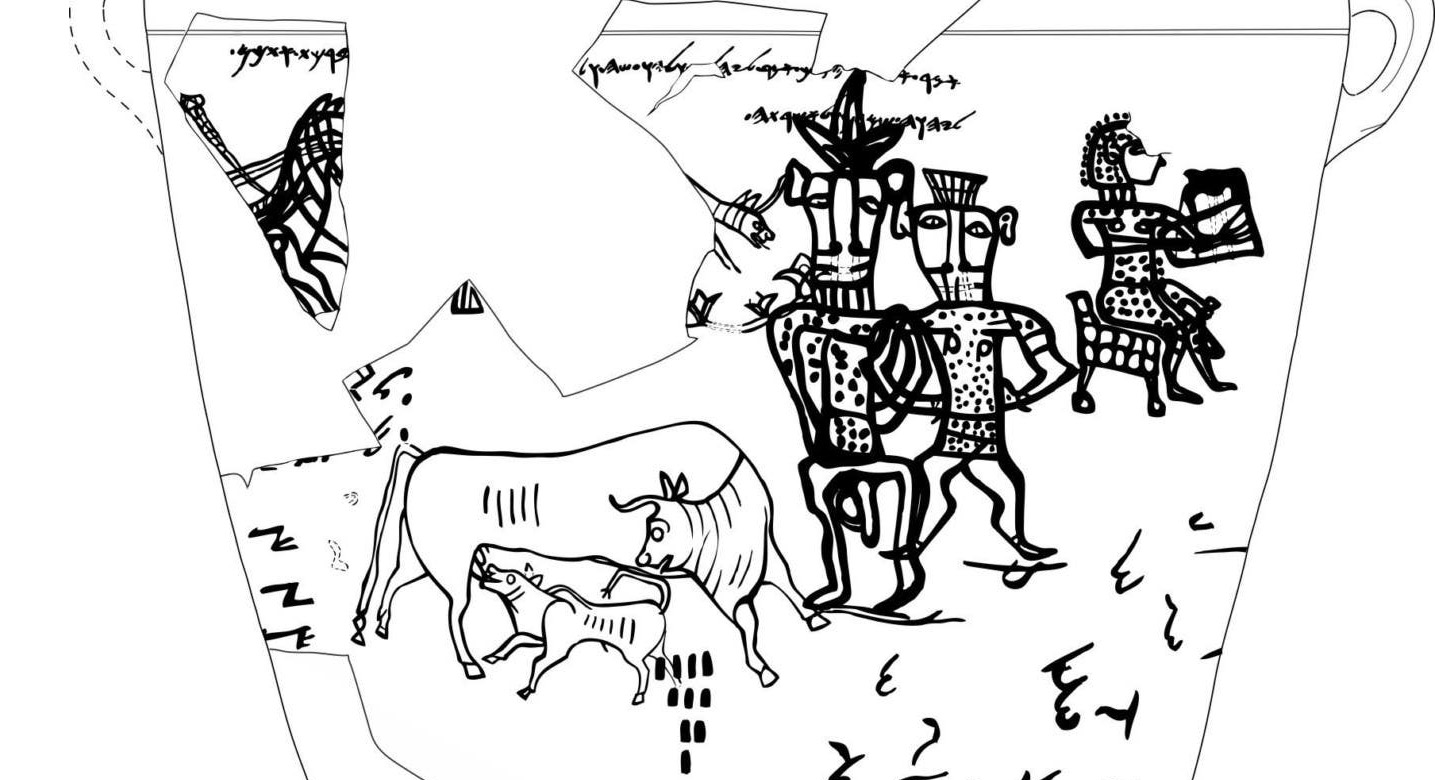
Various gods and goddesses of Canaan make their appearance in the Hebrew Bible. It is easy to get confused. In Judges 2:13, for instance, the Israelites serve “the Baals and the Ashtaroth”; in Judges 3:7, they serve “the Baals and the Asheroth”. Ashtaroth and Asheroth – what is the difference? This issue is meant as…
-

Toledot in Genesis – What Are They and Why Do They Matter?
To define the structure of a book, we may have more than one valid option. Sometimes, a different way of looking at it opens new insights into meaning and message. This is certainly true for Genesis. You can also watch this content as a VIDEO PODCAST or listen to it as an AUDIO PODCAST A…
-

A Pilgrimage through the Gospel of John: Grace and Truth
As explained in the previous issue, my pilgrimage through Italy on the Via di Francesco turned into a pilgrimage through the gospel of John, using something akin to the Ignatian approach to Bible meditation. Jesus makes God known; how does he do that? I only offer a small taster. The idea is to whet your…
-
A Pilgrimage through the Gospel of John: How I Got There
The key to understanding the gospel of John is not studying but meditation. At least for me it turned out to be that way. I have always had a hard time getting into this book. It finally opened up to me when I meditated on it rather than studied it. Therefore, after three long and…
-

The Atonement 3: Back to the Church Fathers
Does Christus Victor trump penal substitution? In two previous issues, I began to present images, models, and explanations of the atonement. I have two more models to discuss (first and foremost Christus Victor). I will finish with an ancient but powerful alternative take on the whole question. If you prefer, you can also DOWNLOAD THE…
-

The Atonement 2: Models and Explanations
In the previous issue, I looked at terminology and I introduced five (or six) groups of images or metaphors that illustrate the atonement. It is now time to attempt a more thorough explanation. This is no small endeavour. Studying the atonement makes me feel like I am standing in front of a magnificent building, much…
-

The Atonement 1: Introduction
The atonement: what is it, and how does it ‘work’? This is a big – and beautiful – question, touching on the very heart of salvation: why did Christ die on a Roman cross?
-

Redefinitions II: The Righteousness of God
In the previous issue, I wrestled with objective and subjective genitives and whether the phrase “faith of/in Christ” needs reinterpretation. This month, I do the same with a different phrase, one that is perhaps of even greater importance: “the righteousness of God” in Romans 1:17, in which “God” is in the genitive case. For I…
-
Redefinitions I: Faith or Faithfulness?
I am gearing up to write on models of the atonement: different ways to explain what Christ accomplished by dying on the cross. This is a big topic, and a contested one. Traditional understandings get a lot of flak these days. Rightly or wrongly? We will see. Here, I deal with a much smaller but…
-
The Image of God: Much More Than a Pious Idea
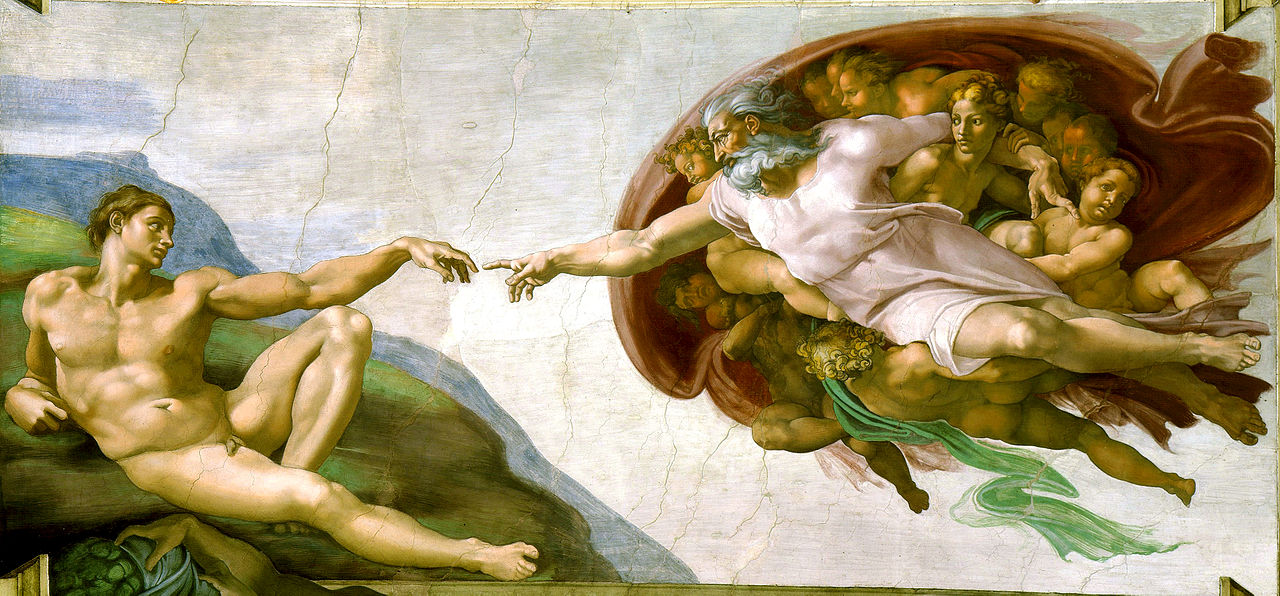
As a phrase, “the image of God” appears only once in the Bible, in Genesis 1:27. In the OT, the idea is also referred to in Genesis 5:1 and 9:6. That is not much. As a result, there is an interpretational challenge. Throughout the centuries, interpreters have debated without agreement what, exactly, this image consists…
-
The Structure of the Book of Psalms and Its Message 2
It is often held that the book of Psalms is the biblical version of a hymn book, with little or no structure. (I used to believe this myself until quite recently.) But there is more to Psalms than meets the eye. This is the second and final part: an attempt to decode the message!
-
The Structure of the Book of Psalms and Its Message 1
It is often held that the book of Psalms is the biblical version of a hymn book, with little or no structure. (I used to believe this myself until quite recently.) But there is more to Psalms than meets the eye. Find out what I learned.
-

The Rhetorical Structure of 2 Corinthians
Second Corinthians is hard to follow – until you understand the rhetorical strategy and skill Paul applies in his fight for integrity.
-

Sacrifices and Purity Laws: Do We Need a Red Heifer?
For the first time in many (many) years, I taught the book of Numbers this January. I often get asked what my favourite book of the Bible is. My answer has never been: “Numbers!” But I must say, as I spent time reflecting on this book, it grew on me. Or perhaps more accurately, it…
-

1 Corinthians: Is Paul Also among the Rhetoricians?
Occasionally, we run into a piece of new information that throws a bright new light on something familiar. It enables us to see coherence where before we had not noticed connections. In other words, it creates an “Aha!” experience: suddenly everything (or at least something) makes sense. This happened to me when I was preparing…
-
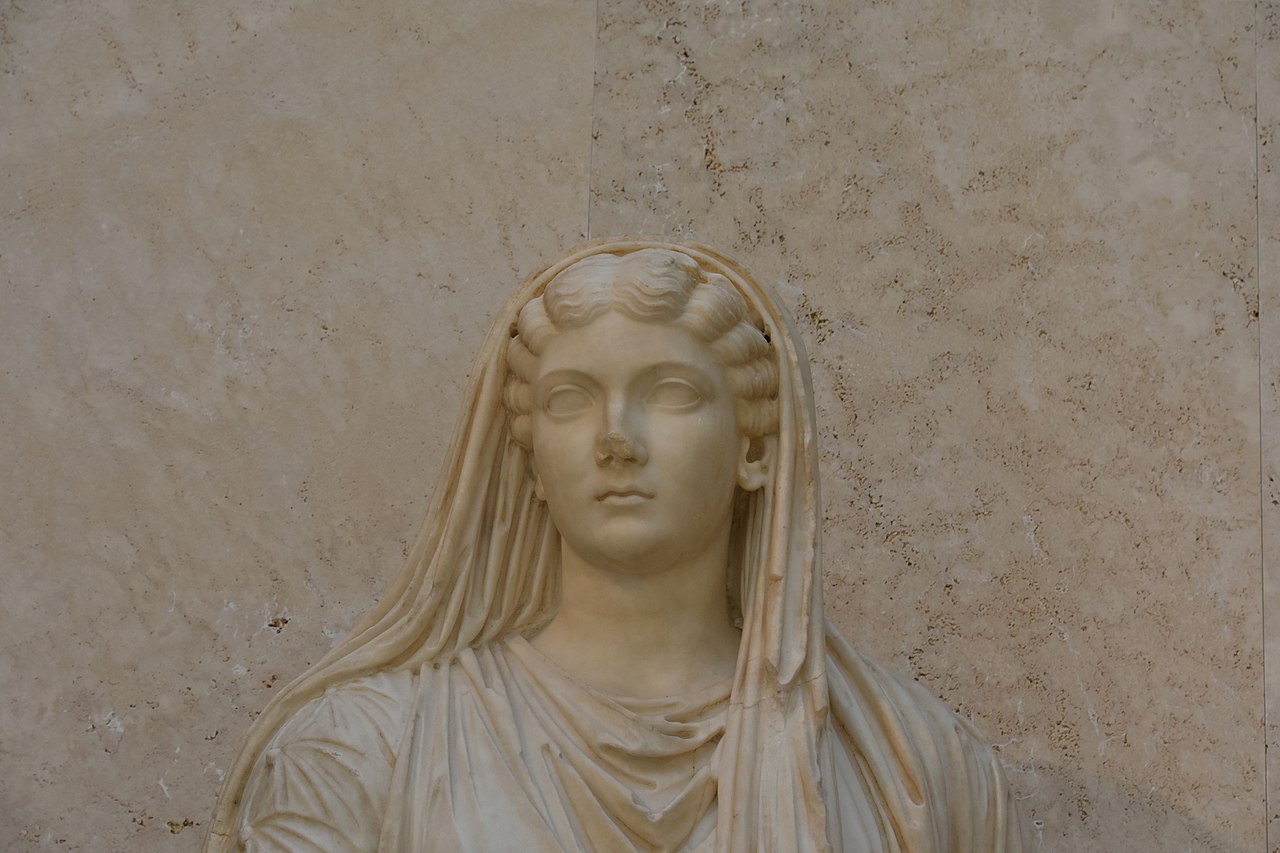
‘New Women’ in Rome and in Corinth
I should have read this book much sooner. It provides crucial background information on the life of women in the first century. In doing this, it illuminates several difficult and controversial passages in the New Testament. I am referring to Bruce Winter’s Roman Wives, Roman Widows: The Appearance of New Women and the Pauline Communities,…
-

Foreknowledge: God of the Impossible?
Does God know the future, in detail, the way he knows the present and the past? After last month’s look at God and time, it is now time (ahem) to ask this follow-up question. One book arguing against God’s foreknowledge has the curious title God of the Possible (Boyd 2001), which makes me wonder. You…
-

Time and Eternity
“Those who think about time are thinking deeply. Those who think about God are thinking even more deeply still. Those who try to think about God and time are pressing the very limits of human understanding” (Craig 2001a: 4). Indeed. I can speak from experience now: William Lane Craig’s statement is true. I have been…
-
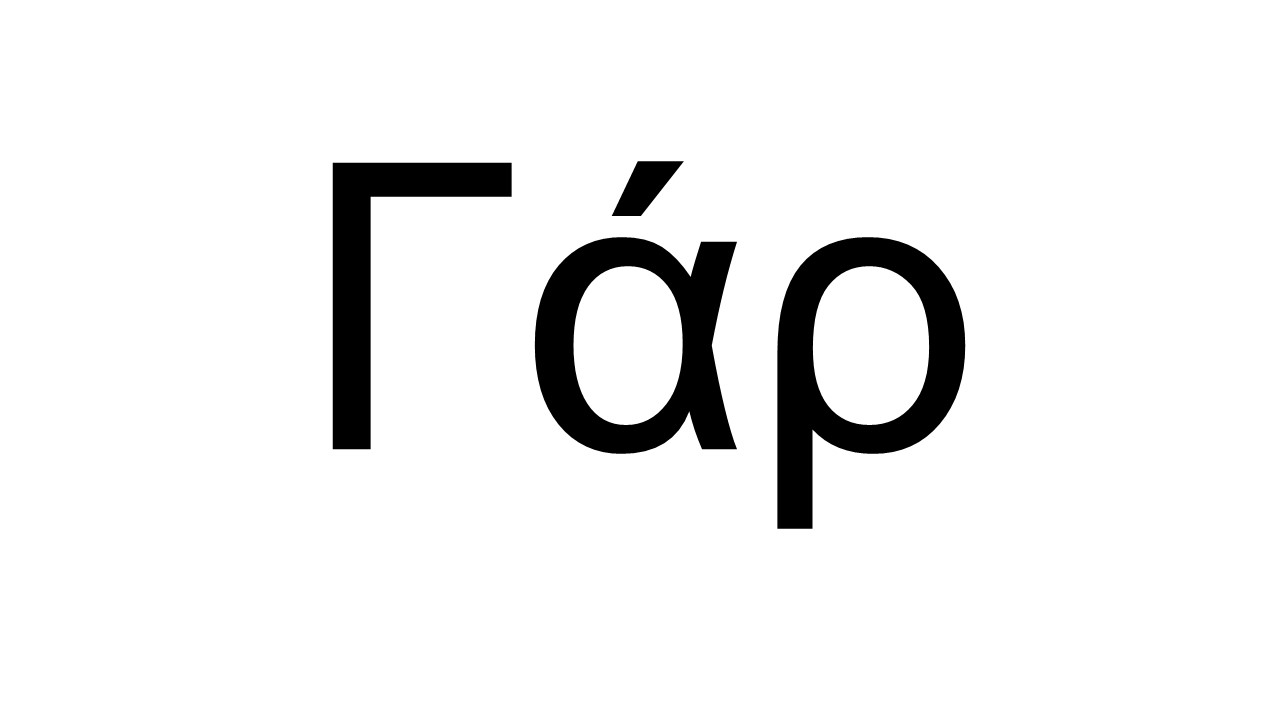
For
I kept it short. The title I mean. It is the shortest title I’ve had; it does not get much shorter than this. I also kept it small. After several issues dealing with an entire book of the Bible, this one is about a single word, and a short one at that: the conjunction for.…
-

Job: Will We Serve God for Nothing?
It is the third time in a row that I write about a book of the Bible. There are so many exciting books to choose from! Job is a book I have not seriously touched in many years, so it is time I do something with it. I ran into a book by Tremper Longman…
-

Joel: An Army of ‘Locusts’ or an ‘Army’ of Locusts?
The title is subtle (read it again if necessary), but in those few words, it nails a significant debate among interpreters of the prophet Joel. What are we to make of the language referring to locusts and to people, soldiers, and armies? What is literal here and what is metaphorical? Was Judah invaded by a…
-

Chaos and Anarchy in Judges: What Is the Message?
The introduction to the book of Judges in the English Standard Version (ESV) states: “Judges is named after an interesting collection of individuals who led Israel after Joshua’s death”. To call this an understatement would itself be an understatement! But what do we make of this seemingly erratic collection of tales about the exploits of…
-
The New Toolbox Is Here! And: More Word Crunchers: Lexica and Theological Dictionaries (Resources 2)
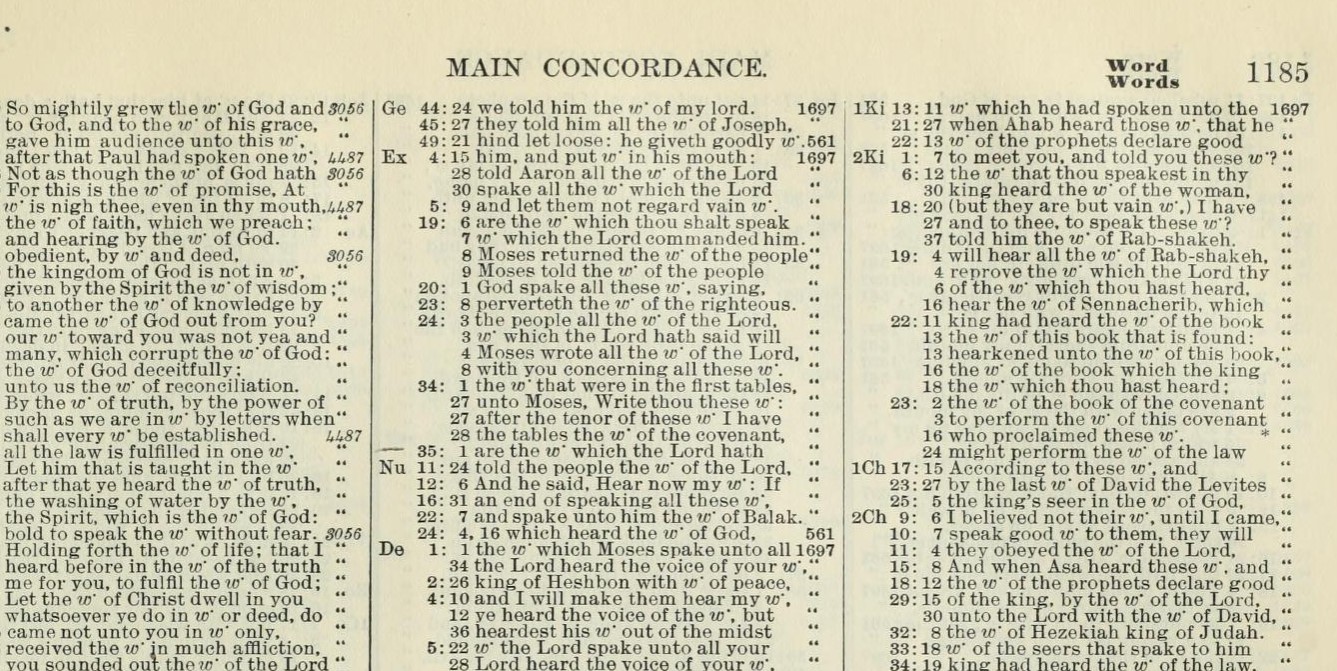
This month, I present the revised version of the Digital Toolbox; it is available to everyone who subscribes to this blog as a free download (to register and gain access, see the form on the right). All the links have been checked and many have been added: about 500, to be more precise, raising the…
-
Word Cruncher! Reverse Interlinear (Resources 1)
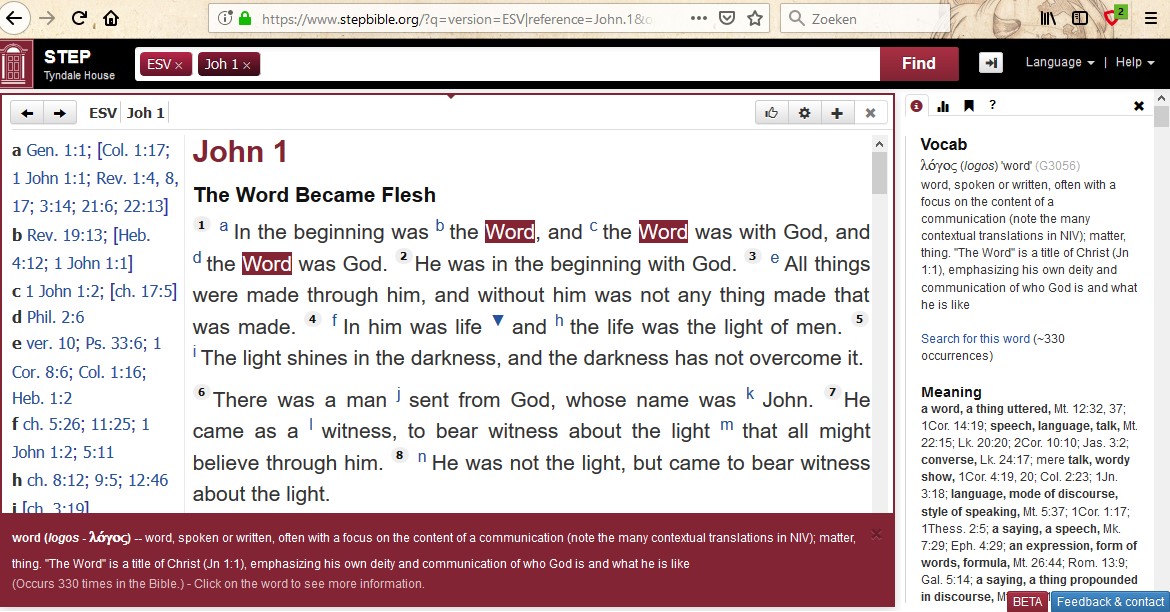
I am getting ready for a revision of the Digital Toolbox (hopefully next month), which draws my attention to resources for Bible study. In this issue and the next, I will discuss a few, at least one of which may be new to you. They all have to do with taking a closer look at…