Isaiah is probably the book of the Bible I taught most often (although Revelation is catching up). Yet I have not written much about Isaiah here, except for a few issues dealing with historical background: Assyria, Sennacherib, Babylon.
I even taught the week on Isaiah in the very first year I was on staff with YWAM’s School of Biblical Studies (SBS), having finished my own SBS only the year before. This was 1990. 35 years of teaching Isaiah – high time I write about it some more!
You can also watch this content as a VIDEO PODCAST (Part II)
My Foundation
That first time teaching Isaiah was a stretch. I remember still struggling with many questions myself. As I was working on a master’s degree with YWAM’s University of the Nations around that time, I chose the book of Isaiah as my thesis subject, hoping to gain a better grasp.
Ron Smith, who was my thesis supervisor, insisted I read through the book 50 times, which I did.
One person who had heard about my 50 readings before we met in person, shared she had expected me to be an old man. This is decades ago; I was still young. It is not a Herculean task. Reading through all of Isaiah at a good pace takes about half a day; four hours if you are fast. While working on the thesis, I did this twice a week. So it took me half a year; quite doable.
It was an investment that continues to pay a rich dividend. These readings and further research became the foundation to teach Isaiah, mostly in SBS, ever since.
My Aim
What I would like to do here, is give an overview of the structure of the book, the way the material is organized.
This does not make for an easy read – not something one picks up for enjoyment. I will do my best, but it is more like a map: useful to find your way and know where you are, than a novel. It is long, too; I considered splitting it in two or three issues, but why hold back and stretch it out?
I would understand, therefore, if you stop reading around here. But if so, you may want to file this content for the next time you read (or teach) Isaiah; then it may come in handy. And if you like ‘solid food’ – be my guest!
The Very Big Picture
One thing has been obvious to most readers. The book consists of two main parts: Isaiah 1-39 and Isaiah 40-66.
The bulk of Isaiah 1-39 is firmly rooted in the 8th century BC, the time in which Isaiah lived. Although there are exceptions, such as Isaiah 13 (which deals with Babylon), in the background stands the looming threat of Assyria, the world empire of the day. During Isaiah’s lifetime, Assyria would destroy the kingdom of Israel (722 BC) and invade Judah (701 BC). The emphasis is on judgement, although the subject of salvation is not absent; in the second part this ratio is reversed, with salvation dominating.
In Isaiah 40-66, Assyria is not even mentioned, with one exception (Is. 52:4), which speaks of “the Assyrian” as in the past. Instead, the Babylonian empire towers as the background and setting for the prophetic words – at least until the end of chapter 48, after which Babylon is not mentioned again. The people addressed, at least initially, appear to be the Israelites in Babylonian exile, not the people of Judah in Isaiah’s own time.
Isaiah 1, 2, 3, Many…
This crucial observation has given rise to the hypothesis that the second half of the book was not written by Isaiah, but by a later, anonymous prophet who lived in Babylon. Scholars refer to him as ‘Second Isaiah’ or ‘Deutero-Isaiah’.
It then was noticed that the part of the book beginning in Isaiah 56 appears to be set in Judah, not Babylon. This gave rise to the idea of yet another prophet living after the return from exile, dubbed ‘Third Isaiah’ or ‘Trito-Isaiah’.
Nowadays, this is not so widely held. It is more common to assume a long process of development for the book. It continued to be rewritten and enlarged for over four or five centuries, with many contributors. The terminology of First, Second, and Third Isaiah, however, continues to be used – not to refer to three authors or sources, but simply to identify three sections in the book. This is why I include this digression on authorship, since it touches on structure.
Scholars have spent much time and effort trying to determine when and in what setting individual units were written or added. They have largely been unable to reach a consensus; opinions differ widely. The lack of hard data (we have little more than the finished book to work with) makes this a speculative exercise.
Fortunately, scholars have increasingly also acknowledged the unity of the book as we have it. Whoever put this material together or added to it did not just practice ‘cut and paste’; Isaiah is a careful composition. This, at least, seems to be an emerging consensus.
After all, scholars speak of Second and Third Isaiah, not because ‘Isaiah’ was their name, but because these sections of the book share many elements in common with each other – and also with the 8th-century prophet. (Which makes me wonder: Perhaps this prophet contributed more to the book which bears his name than modern scholarship considers plausible.)
One example is Isaiah’s unique way of speaking of God as “the Holy One of Israel”. This phrase appears in his book 25 times, plus once “the Holy One of Jacob” (Is. 29:23). Elsewhere in the Bible it appears only three times in the Psalms (Ps. 71:22, 78:41, and 89:18) and twice in Jeremiah (Jer. 50:29 and 51:5). Isaiah uses the phrase 13 times in chapters 1-39 and 13 times in chapters 40-66 (though only two of these are in ‘Third Isaiah’).
There are many other motifs that likewise connect various parts of the book. We can speak of the unity of the book and assume a meaningful composition without agreeing on the question of authorship or source. Isaiah is not a mere collage of oracles.
With this out of the way, let’s return to our actual topic: the structure of Isaiah.
Isaiah 1: Prologue
The first chapter of Isaiah takes a special position, somewhat separate from the rest of the book. Isaiah 2 begins with a second title or superscript. Besides, Isaiah 1 describes the country as a desolation, almost like Sodom and Gomorrah; Jerusalem is left as a lonely booth (Is. 1:7-9).
This would not have been true in the days of Uzziah or Jotham, when Isaiah first began to prophesy (ca. 739 BC). Most likely, this describes the land after the Assyrian invasion under Sennacherib in 701 BC. In other words, this chapter is not chronological; it comes late in Isaiah’s ministry, certainly not first. It serves as a prologue to the book.
The chapter presents an indictment in the form of a so-called ‘covenant lawsuit’. Israel is confronted with its rebellion and its empty worship. Isaiah 1 also speaks of the redemption of Zion – but only for those who repent.
It is widely recognized that Isaiah 1 forms an inclusio – a literary “bracketing” device that signals unity and draws attention to recurring themes or ideas – with chapters 65 and 66. This inclusio is one indication of the literary and theological coherence of the book.
Some of the recurring motifs at the beginning and the end of Isaiah besides rebellion, Zion/Jerusalem, and redemption are:
- The mention of heavens and earth (Is. 1:2, 65:17, 66:22)
- A critique of empty and perverse rituals (1:11-17, 65:3-5, 66:3f)
- The garden sanctuaries (1:29, 65:3, 66:17)
- God as parent (1:2, 66:13, 65:18f)
- The distinction between the repentant and those who refuse (1:16-20, 28-31, 65:1-16)
Isaiah 2-12: Diagnosis and Solution
The focus of Isaiah 2-12 is Israel and Judah. The first unit is Isaiah 2-4; it forms a kind of sandwich. Between two salvation oracles about the ultimate or ‘eschatological’ future, Isaiah describes judgement and its causes. We get an assessment of the spiritual condition of the nation, a diagnosis: terminally ill.
Isaiah 5 captures this in the image and song of the unproductive vineyard, a passage that later inspired Jesus’s parables of the unrighteous tenants (Mk. 1-12 and parallels). The song is followed by a series of ‘woes’, a prophetic form that combines indictment and the resulting judgement: “Woe to those … Therefore …”
Isaiah 6 recounts a vision of Isaiah in the year that Uzziah died (Is. 6:1). It is the first of only a few precise dates in the book and makes for a sharp break.
Isaiah 6 reads like his original call to be a prophet, even though it is not the beginning of the book. Its placement here may deliberately divide Isaiah 2-12 into two halves.
On the one hand, chapter 6 completes the analysis, what we could call the ‘book of sin and hardening’ (Is. 1-6). The vision confronts Isaiah with the holiness of God. After being cleansed and volunteering, he is sent on a mission of hardening that will lead to exile. By now, after the preceding chapters, we can understand why this mission of hardening was necessary.
On the other hand, the chapter ends with a reference to the remaining stump as “the holy seed (or offspring)”. This points forward to Isaiah 7-12, the ‘book of Immanuel’, where we read of this stump and this seed again: “For to us a child is born … a shoot from the stump of Jesse” (Is. 9:6 and 11:1). He is God’s solution to the problem diagnosed in these chapters.
The offspring, Immanuel, is spoken of three times in Isaiah 7-12. First, we read of his conception (Is. 7:14). This is to be a sign, so we expect something out of the ordinary.
It cannot be Isaiah’s son, because to him is given a different name (Is. 8:3f). It cannot be Hezekiah because he has already been born (cf. 2 Ki. 18:2). It does not have to be a child born soon for the prediction to be true. It functions more as a sign of judgement than of promise: Isaiah 7:17-25 and the whole of chapter 8 announce the coming of the Assyrians. And the sign is not for Ahaz alone; it concerns the entire house of David (Is.7:13f, where you is plural). The dynasty has failed; the human descendants of David cannot be the solution Israel needs. Therefore this child.
In other words, it is an ambiguous sign: Will it be soon?
The key to understand Isaiah 7:14 is in the continuation of the motif. The child reappears in Isaiah 9. Verse 6 and 7 make clear he is a descendant of David, yet he is not merely human. Here the prophecy leaps forward into a more distant future. The child reappears in Isaiah 11, now an adult ready to reign.

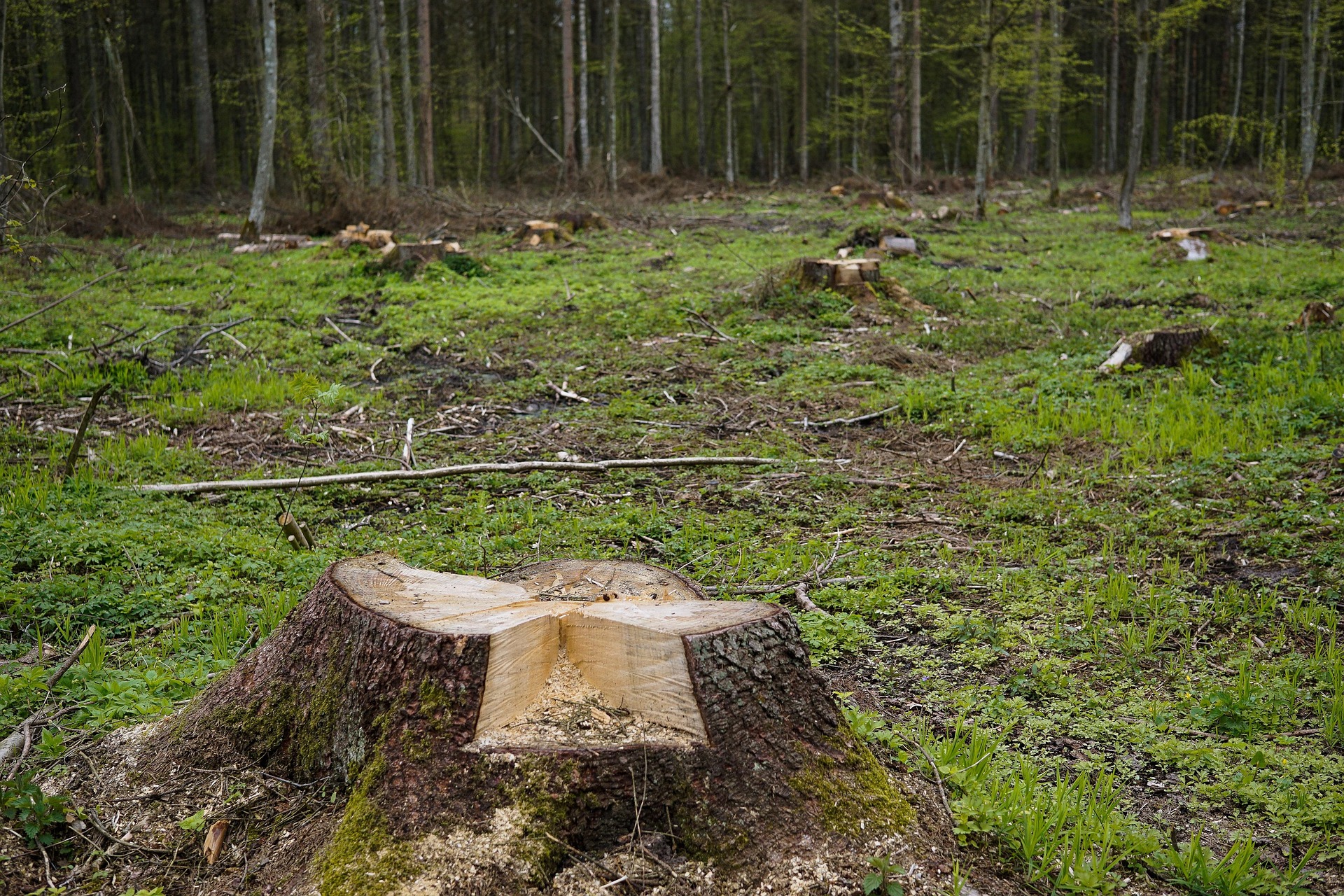
And the Assyrians? In an image borrowed from forestry, they will be cut down (Is. 10:33f). In their place, God’s answer to the empires of this world will grow: the “shoot from the stump of Jesse” (Is. 11:1); thus opens the third and most extensive description of this ‘New David,’ the ultimate solution.
Isaiah 12 closes the section with an anticipated response by the people “on that day”, a song of praise and a call to let the whole world know.
Isaiah 13-27 I: The Nations, One by One
The next section contains oracles on other nations. These chapters have an intricate structure. There are ten titles or superscripts, forming two groups of five oracles each. The second group tends to have somewhat enigmatic titles, but it is clear enough which nation is in view.
Strikingly, each group begins not with Assyria – the immediate threat – but with Babylon, the empire that would rise later. The fourth one in each group surprisingly deals with God’s own people, not a foreign nation.
Although the oracles mainly announce judgement, mostly connected to the looming Assyrian crisis, they also contain promise and blessing for the nations (but not for Babylon) well beyond this time.
Isaiah 13-27 II: The Overall Picture
Isaiah 24-27 is its own unit but clearly relates to Isaiah 13-23: it combines the individual oracles into one dramatic picture. It paints a dark cloud representing the time of turmoil ahead; beyond the upheaval – behind the cloud, so to say – the light of redemption shines brightly (e.g., Is. 24:14-16a). The net result of the coming crisis is that nations far away will get to know and give praise to the God of Israel.
The section demonstrates a common feature of Hebrew prophecy: that of foreshortening. The duration of time is ignored; everything is compressed into one ‘layer’, as if it will all happen in short succession. In reality, fulfilment may stretch out over centuries, as is certainly the case here.
In scholarly literature, Isaiah 24-27 is often called the ‘Little Apocalypse’ or the ‘Isaiah Apocalypse’, often assumed to be a late addition to the book. However, it is not an apocalypse at all, since it lacks the formal characteristics, for instance visions, angels, and a glimpse into a spiritual or heavenly realm. What most resembles apocalyptic literature is its eschatology of cosmic conflict. This is most obvious in Isaiah 24:21-23 and 27:1: YHWH will decisively intervene to inaugurate a new age. However, this element is not unique to apocalyptic but also appears in non-apocalyptic prophecy.
This is not an apocalypse, but it does display a chiastic structure (text in which elements are repeated in reverse order):
- Is. 24:1-20 God’s city and vineyard
- Is. 24:21-23 God will punish (host of heaven and kings on earth, 24:21) and reign
- Is. 25:1-5 Response in song: city of man no more
- Is. 25:6-12 The Great Banquet on Mount Zion
- Is. 26:1-6 Response in song: city of God
- Is. 25:1-5 Response in song: city of man no more
- Is. 26:7-27:1 God will reign and punish (Leviathan, 27:1)
- Is. 24:21-23 God will punish (host of heaven and kings on earth, 24:21) and reign
- Is. 27:2-13 God’s vineyard and city
[Note: Admittedly, Isaiah 26:7-19 fits uneasily; is it indeed part of the battle passage? Or is it the continuation of the song in verses 1-6? Or is it its own unit? In that case, it disrupts the chiastic structure.]
One of the most fascinating features in Isaiah 24-27 is that ‘the city’ of Isaiah 25:2 and 26:5 remains nameless. Is it Nineveh? Is it Babylon? Rome? Or all of the above and more? The latter is likely: ‘the city’ represents the city – or kingdom – of this world, not one specific location. Isaiah has generalized the message to make it applicable to any ruthless empire or ruler. Here, he is not interested in specifics but in the assured outcome: the voice of the ruthless will be silenced.
Also interesting: the return of the vineyard (Is. 27:2-6), a counterpart to Isaiah 5. It is now in perfect condition. God’s vineyard will yet fill the earth with fruit (Is. 27:6).

Isaiah 28-35 Moving toward 701 BC
Next, Isaiah returns to Judah and Jerusalem. What follows, is a series of ‘woes’ (Is. 28:1, 29:1, 15, 30:1, 31:1, 33:1) The ‘woes’ are directed against Jerusalem, except for the last one, which is against “the destroyer”, in context, Assyria.
The nature of the text changes. Beyond the appearance of ‘woe’, it becomes harder to distinguish individual oracles. The text is more unified and coherent; several themes are woven together. The text resembles a symphony, repeating and developing a limited set of themes. Chapters 40 and following will display this characteristic even more strongly.
Most of this material dates from the reign of Hezekiah. The main repeated themes are:
- The Assyrians are coming, referring to Sennacherib’s invasion in 701 BC (e.g., Is. 29:1-4).
- Do not rely on Egypt or an alliance with other nations, which is precisely what they were doing (e.g., Is. 30:1-7).
- God himself will save Jerusalem from the Assyrians (e.g., Is. 29:5-8).
In the promise of deliverance and the description of the aftermath of the invasion, Isaiah at times goes well beyond what happened historically. Hezekiah was a good king; but was he truly this good?
Again, we may be looking at foreshortening. Isaiah connects the rescue of his own day with the greater salvation and the greater king of righteousness that would come much later.
Isaiah 34 and 35 are quite distinct. They do something like Isaiah 24-27 in the previous section. They provide a larger and generalized picture that builds on the preceding chapters but looks at the more distant and ultimate victory and salvation.
The two chapters stand in contrast to each other: Edom will become a desert wasteland; the desert will become a fruitful land.
Isaiah 34 and 35 also prepare the ground for the second half of Isaiah. They contain many themes that will recur. Isaiah 35 is the gospel in pictures. It reads like a summary or sample of much of what is to follow in the remainder of the book. Well-constructed indeed!
Isaiah 36-39 Assyrians in the Land
Before moving forward, Isaiah pauses for a section of historical narrative. It recounts the invasion by Sennacherib and the illness and healing of Hezekiah around the same time. This led to a visit from far-away Babylon, described in Isaiah 39.
These chapters document the fulfilment of Isaiah’s prophecies. They also expose the contrast with Hezekiah’s father Ahaz (Is. 7). The situations are quite parallel; both faced a military threat and received a message from God. The response could not have been more different.
Isaiah 39 makes clear, however, that Hezekiah, too, falls short. He is faithful, but not faithful enough to secure lasting salvation for his people. Exile is unavoidable as a necessary step toward that greater salvation.
With this, and by ending with Babylon, Isaiah 39 prepares the ground and builds a bridge to the second half of Isaiah – where Israel indeed finds itself in Babylonian captivity, yearning for deliverance.

Isaiah 40-66: The Return from Exile and Beyond
The second half of Isaiah opens with a change in audience: In view are not the people of Judah and Jerusalem in the days of Isaiah, but the people of Israel in exile, about a century and a half later. The tone has changed as well: comfort instead of confrontation.
However, toward the end, there will be an increasingly urgent warning – and with it, an appeal, mostly implicit, to repent. As in Isaiah 1, the line between the ‘saved’ and the ‘judged’ does not simply divide the Israelites from the Gentiles; it runs right through the people of Israel as well.
As mentioned when discussing Isaiah 28-35, these chapters read much like a symphony. Individual oracles are often impossible to discern. Instead, we are reading a continuous presentation, perhaps a carefully composed literary work rather than a collection of spoken messages.
It presents us with a breathtaking panorama of everything that God still intends to do: the return from exile and beyond – stretching all the way into new heavens and a new earth, the only place in the Old Testament where this phrase is used.
We should therefore recognize that there is substantial foreshortening of time in these chapters. For long stretches, it reads as if everything happens in rapid succession, as if Cyrus and the Servant are contemporaries, ushering in the glorious future. However, there are indications of a process as well. Especially Isaiah 63-66 address frustration and doubt caused by a perceived delay and God’s apparent passivity. It will take a very long time – we know now – for all of this to come to pass.
In what follows, I will divide this part of the book into three sections: Isaiah 40-48, 49-57, and 58-66. While it is not uncommon to recognize some sort of break at Isaiah 49:1, it is unusual to divide the book at Isaiah 58:1. As we have seen, modern scholarship sees the main division at Isaiah 56:1. This is supposed to be the beginning of ‘Third Isaiah’ and perhaps a post-exilic setting (even though much of Isaiah 56 and 57 would fit a pre-exilic audience as well).
My reasons to depart from this near-consensus are the following:
- The connections between Isaiah 56 and the preceding chapters, as will be explained below
- The repeated phrase, a structural marker, at the end of Isaiah 48 and Isaiah 57, “there is no peace for the wicked”; it is missing at the end of Isaiah 66, but a similar idea appears there in reference to those who rebelled against God: “their worm shall not die, their fire shall not be quenched” (Is. 66:24)
- The unique thematic emphasis in each section, as will be described below

Isaiah 40-48: Deliverance from Babylon
Creator. God is the creator, the only God, who controls all things.
Babylon. Babylon is referred to by name four times (but not after chapter 48).
Idols. Isaiah ridicules the idols; they cannot do anything. The term idol is used six times here, but only once in the remaining chapters (Is. 66:3).
Lawsuit. First in Isaiah 41:1 and more clearly in Isaiah 41:21-29, God takes the nations and these idols to court. At stake is who truly is God. The summons also appears in Isaiah 43:9-12, 44:6-8, 45:20-21 and 48:14, but not again.
Foretelling. The question will be decided based on an ability to accurately foretell the future (for references, see the previous point; this element likewise does not reappear after chapter 48).
Cyrus. God shows his superiority by announcing who will deal with Babylon and order the rebuilding of Jerusalem and its temple. He even identifies this person by name: Cyrus (Is. 41:2f, 25-27, 44:28-45:7, 13, 48:14f, after which he is not referred to again).
The overall topic of the section is deliverance from Babylon and exile. In the next section, this will shift to the salvation and restoration of Zion.
Isaiah 49-57: The Salvation of Zion
Zion. From here on, no more Babylon. Another woman takes central stage: Zion, personified as a wife and mother bereft of children.
The Servant. Instead of Cyrus, we now read of an anonymous servant. Whereas Cyrus is to be miraculously successful, this person looks like an abysmal failure. He is repulsive.
The Servant makes his first appearance in the previous section, Isaiah 42:1-9, but now he dominates the text: Isaiah 49:1-13, 50:4-9, 52:13-53:12. At first glance, these ‘Servant passages’ or ‘Servant Songs’, as they are often called, show little connection to the surrounding text. They are not obviously integrated, which is why they have sometimes been treated as separate, semi-independent ‘songs’.
However, without the Servant, there is no agent who will bring God’s salvation about. He is essential: no Servant, no salvation. We are to understand that everything that follows a particular Servant passage is the result of what he, the Servant, has done.
I include Isaiah 56 and 57 in this section because of the phrase in Isaiah 57:21. In addition, several key terms and ideas connect Isaiah 56 with the preceding chapters:
- Everlasting (Is. 55:3, 13, 56:5)
- Name (Is. 55:13, 56:5)
- Sign or monument (Is. 55:13, 56:5)
- God’s salvation and righteousness (Is. 56:1), a repeated phrase in Isaiah 40-55
Admittedly, there are also connections to what follows. Sabbath (Is. 56:2, 4, 6), for instance, reappears in Isaiah 58:13 and 66:23. But then, this underlines the unity of the book as it stands. And Isaiah 58 is much more of discontinuity (a textual leap) than is Isaiah 56.
Because, most importantly, Isaiah 56 assumes and builds on what precedes it. It does not stand on its own, as a fresh beginning; it is a call to respond. The reason for the appeal is clearly stated in Isaiah 56:1: “…for soon my salvation will come, and my righteousness be revealed” – the very subject and a repeated phrase of the preceding chapters. It looks like an application of the announcement that has gone before. It is a conclusion, not an opening.
Isaiah 58-66: Future Glory and Personal Responsibility
The final section includes the climax of the prophetic promise (Is. 60-62), but it also emphasizes the importance of righteousness. Without it, individuals will not share in the glorious future. There is an interchange between the two themes of future blessing and judgement. There also appears to be a chiasm in this section:
- Is. 58:1-59:15a Community fast and God’s response
- Is. 59:15b-21 Divine warrior goes out
- Is. 60-62 Glory of Zion
- Is. 63:1-6 Divine warrior returns
- Is. 59:15b-21 Divine warrior goes out
- Is. 63:7-66:24 Community prayer and God’s response
[In all fairness: The chiasm could be expanded to include Isaiah 56 and 57 as the counterpart of Isaiah 65 and 66. These chapters share the awareness of two parties in Israel: the servants of God and those who rebel against him. This would be an argument in favour of a break at Isaiah 56:1. However, it is not unusual to have more than one principle by which a well-constructed text is arranged, leading to different structures with overlapping units. Daniel, for instance, consists of narrative (Dan. 1-6) and visions (Dan. 7-12), yet in terms of language, the switch – from Aramaic to Hebrew – occurs at Daniel 8:1. This is also where the chiasm of Daniel 2-7 concludes. Seen from this perspective, Daniel’s first part includes one, but only one, of the visions that in another perspective belongs to the second part.]
The concluding prayer in Isaiah 63:7-64:12 is comparable to the songs we found in Isaiah 12 and 26: these are words put into the mouth of a future generation of God’s people, responding to God. Again, there is an awareness that fulfilment is not immediate, despite the ultra-swift movement in the preceding chapters.

The Three-Fold Gospel of Isaiah
The threefold structure of Isaiah 40-66 thus displays a surprising pattern:
- In Isaiah 40-48, God, who is the creator, also initiates salvation.
- In Isaiah 49-57, the Servant is the agent making this salvation reality; the New Testament understands this to be Jesus, the Son.
- In Isaiah 58-66, although less clear, there is a certain emphasis on the Spirit of God. He is the one who turns God’s people from rebellion and leads them to glory.
Thus, Isaiah presents nothing less than the gospel in advance, announcing the good news – literally in Isaiah 40:9 and a few other places. God the Creator initiates salvation, the Servant will secure it, and the Spirit will bring it to completion. At the end of the book of Isaiah, we are ready for Christmas to come and salvation to begin.

Attribution
All images taken from Pixabay (CC0)
References
Unless indicated differently, Scripture quotations are from The Holy Bible, English Standard Version®, copyright © 2001 by Crossway Bibles, a publishing ministry of Good News Publishers. Used by permission. All rights reserved.